
2024

Lecture The Position of the Victim in History Textbooks

Last night, I had the privilege of revisiting my alma mater — if only for a short while. Walking through the familiar halls of the Department of History at the Faculty of Humanities and Social Sciences brought back a flood of memories. The building itself has changed little since I first stepped through its doors

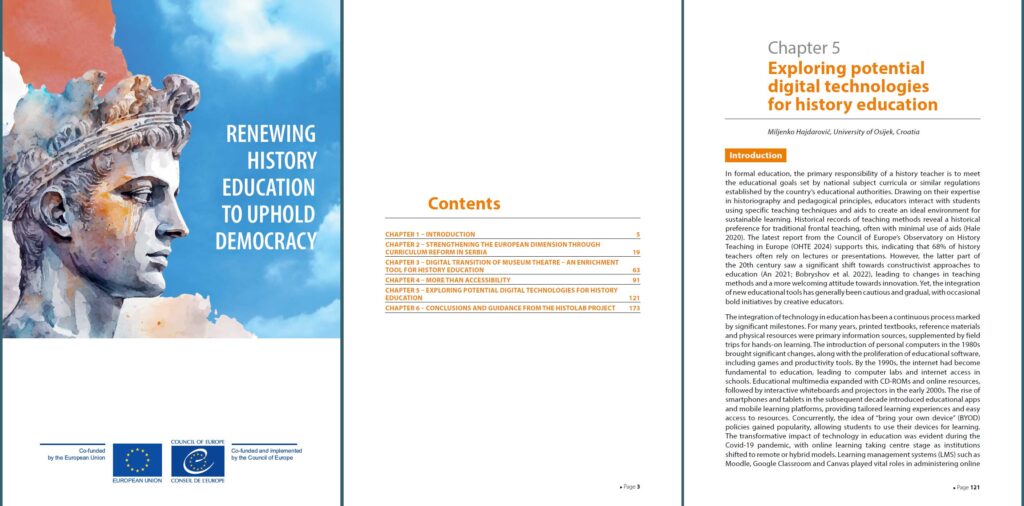
Exploring potential digital technologies for history education

This excerpt from the Council of Europe’s “Exploring potential digital technologies for history education” publication investigates the impact of emerging digital technologies on history education, primarily focusing on artificial intelligence, extended reality, 5G connectivity, natural language processing, and gamification with learning analytics. The research methodology involved technological forecasting, the Futures Wheel, and the Delphi technique,

NotebookLM shocked me

I’m completely, completely in shock. I just tested an experimental AI—Google’s NotebookLM. I gave it a link to an article about Princess Kinana. And check out what the AI managed to do in under three minutes.

Network of Concerned Historians about the textbook ban in Croatia

The Network of Concerned Historians thirtieth Annual Report, published on August 5th, 2024, is a stark reminder of the urgent need to address the intersection of history and human rights. This Report, which covers events and developments in 2023 and 2024, highlights the pervasive issue of historical censorship and the persecution of historians, archivists, and archaeologists

weimar

Note from Weimar

Weimar is known for its rich historical and cultural heritage. In the 18th century, it became the center of the German cultural renaissance, thanks to writers Goethe and Schiller. Today, they’re even more influential than they were back then. There’s Goethe’s house, street, square, summer house, museum, his wife, children, lovers, and illegitimate children. Naturally,

Scroll to Top